Xenara AI
2025
Designing product experiences that make complex AI systems understandable.

Problem area
Making AI easier to understand
Xenara had a powerful AI platform, but its value wasn't immediately clear. Users struggled to understand what the product did, how it worked, and why it mattered. This created friction across the customer journey, from first impressions to demos and sales conversations.
Product V1. before Redesign

1. Explain a complex AI platform with clarity.
Xenara combines many capabilities AI agents, integrations, analytics, automation, making it difficult for users to quickly undertand what the product does and why it matters.
Discovery
Heuristic Audit
I conducted a heuristic evaluation of Xenara’s existing website to identify barriers to product understanding, engagement, and trust. The audit revealed five opportunities that shaped the redesign strategy.
Key Findings

Opportunity 1
Establish a clear value proposition that explains Xenara’s role in the CX ecosystem.
Opportunity 2
Use animations, microinteractions, and 3D components to capture attention.
Visual Direction
Defining Xenara's AI-first visual direction
After the website audit, I began the product demo experience. I explored multiple visual directions for the chatbot interface to determine which best communicated Xenara's AI capabilities and established a strong foundation for future experiences.
Visual Exploration

Design goals
What I aimed to achieve
Improve User Engagement
Help users quickly grasp how the AI works and the value it provides.
Drive adoption
Help users quickly grasp how the AI works and the value it provides.
Design decision 01
Build a clearer information hierarchy
To reduce cognitive load, information was reorganized into a more structured flow. Rather than introducing isolated features immediately, content was organized around a progression from understanding the problem to understanding the solution. This created a more intuitive experience and helped users navigate complex information more comfortably.
Design decision 02
Design an AI-First Hero
I redesigned the hero into an interactive 3D experience that immediately communicated Xenara's AI-first identity. A custom Spline brain and dynamic particle system transformed the hero from a static banner into an engaging visual metaphor for the platform's intelligence and continuous learning.
V1. Hero Section before redesign

Final Version: Dark Mode

Design decision 03
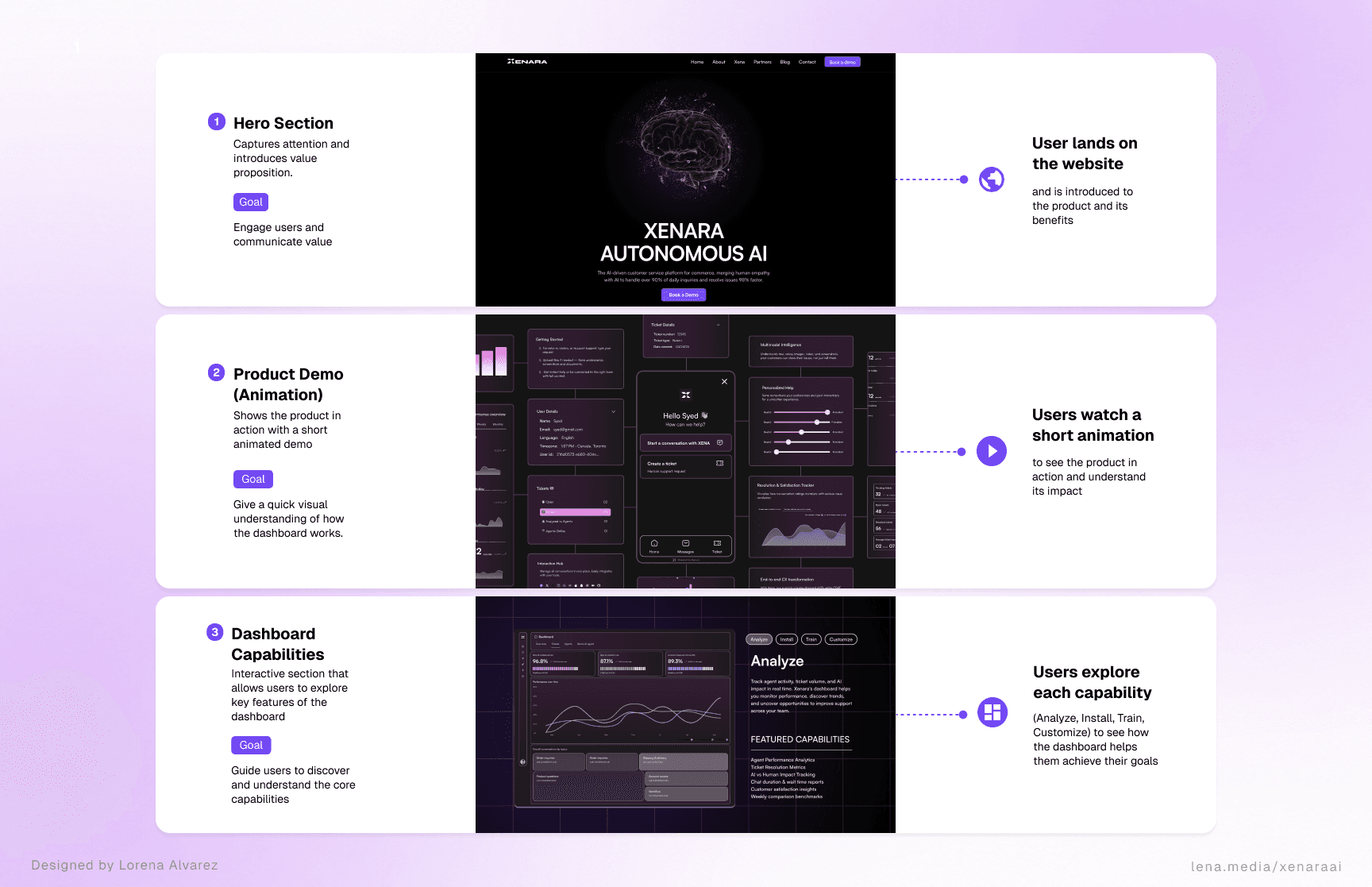
Show the Product Earlier
I reduced the gap between explanation and experience by introducing an interactive product demo immediately after the hero. Showing the product in context made its AI capabilities easier to understand.
Comparing the original journey with a product-first experience

Designed and animated to demonstrate Xenara's AI workflow in context.
Design decision 04
Guide users through dashboard capabilities
Rather than presenting every capability at once, I designed an interactive experience that progressively introduced Xenara's features. Pairing each capability with contextual product previews made the platform easier to understand and navigate.
Guiding users through Xenara's capabilities, one feature at a time.

Interactive walkthrough of Xenara's core capabilities.

Design decision 05
Build Trust Through Transparency
Trust isn't built through technical claims—it's built through understanding. I designed an experience that made Xenara's AI more transparent by connecting product capabilities to clear, contextual interactions.
Designing for Trust
Key trust-building elements

Design decision 06
Visualize the AI Engine
While the product demo showcased Xenara's capabilities, it didn't explain how the AI worked. I designed an animated AI engine experience that visualized the platform's workflow, turning complex processes into a clear, intuitive story.
A conceptual visualization of Xenara's AI Engine

Interactive walkthrough of Xenara's core capabilities.
Implementation
Bridge Design & Development
I bridged design and implementation by building key experiences in Framer, ensuring the final product remained responsive, consistent, and faithful to the original design vision.
From Design to Production

V2. Final Home Page
Outcome
From Data to Dynamic Design
The final experience established a stronger foundation for communicating Xenara's value proposition while creating clearer pathways for understanding the platform. By focusing on clarity, trust, scalability, and product storytelling, the project transformed complex AI concepts into experiences that felt more accessible and intuitive.
V1. Hero Section before redesign

Impact
Measurable Business Impact
The redesign delivered early business results while creating a stronger foundation for product adoption and future growth.

Recognition
Official Launch Recognition
The Xenara V2 redesign was publicly launched through the company's official announcement, where the product design team was recognized for its contributions to improving clarity, navigation, and product storytelling.
As part of the UI/UX team, I collaborated closely with stakeholders and fellow designers to bring the new experience to life.

Retrospective
Structure Before Features
Users rarely struggle because information is missing, they struggle because it's presented in the wrong order. Great product design isn't about making technology look impressive; it's about making complexity clear, trustworthy, and useful.

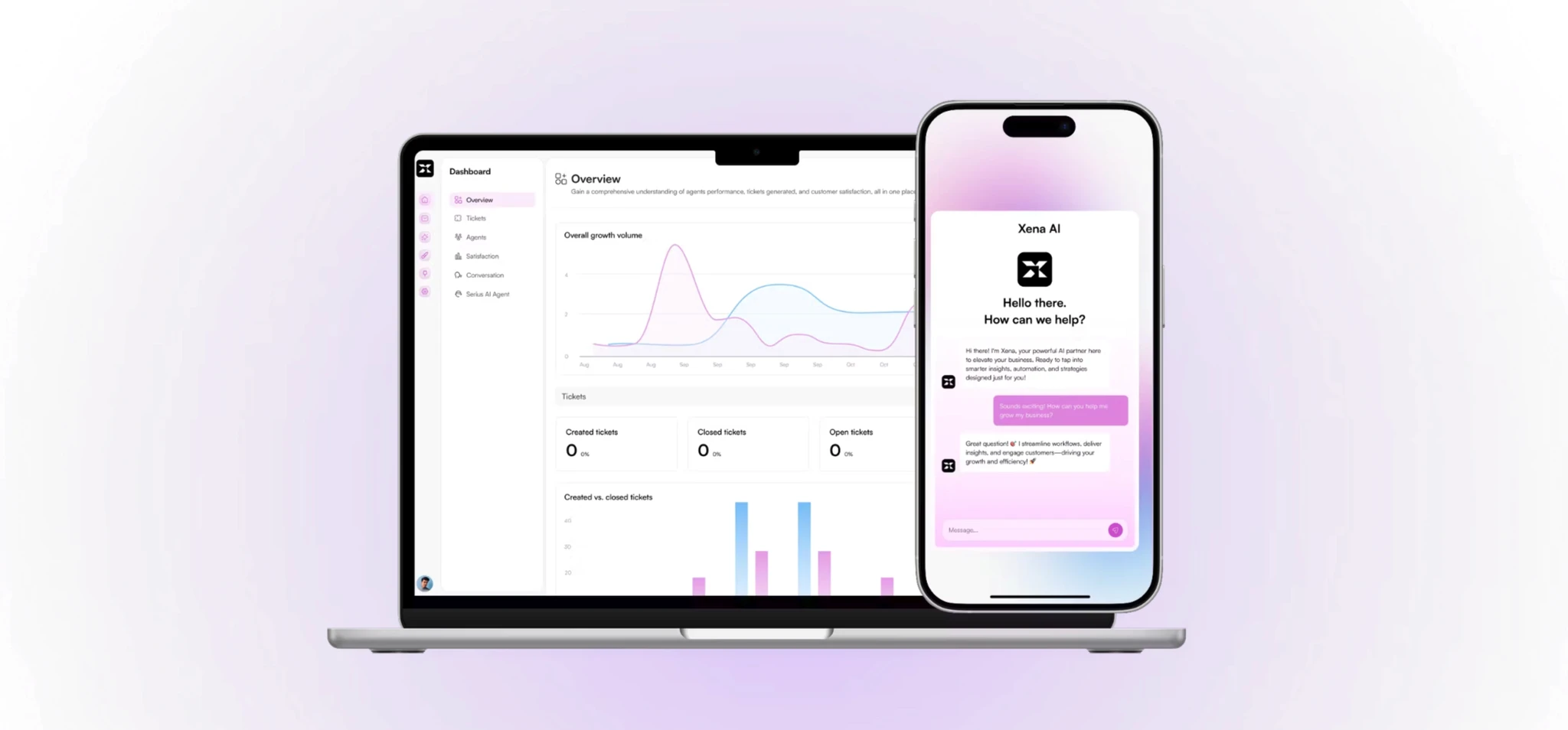
Note: The Framer website functioned as a high-fidelity product and storytelling prototype used for internal alignment, sales, and investor communication. Long-term platform decisions later evolved based on budget and maintenance considerations.