Xenara AI
2025
Designing product experiences that make complex AI systems understandable.
Overview
Overview
Xenara's platform combines AI-powered customer support, engagement, and insights into a single experience.
As the platform evolved, the team faced a common challenge shared by many AI products: the technology was powerful, but communicating that value clearly was difficult.
My role focused on helping simplify complex concepts, improve product communication, and create experiences that felt both intuitive and trustworthy.
The project included product storytelling, responsive design, design system refinement, implementation in Framer, and explorations for future-facing AI experiences.
Opportunity 1: Simplify AI Concepts
Establish a clear value proposition that explains Xenara’s role in the CX ecosystem.
Opportunity 2: Boost Engagement
Use animations, microinteractions, and 3D components to capture attention.
Problem area
The Challenge: Making AI easier to understand
AI products often face a communication problem. Xenara offered powerful AI capabilities, but users struggle to understand what the product does, why it matters, and how it fits into their workflow.
This challenge became especially visible when explaining Xenara's capabilities to customers, partners, and investors.
AI products often struggle with perception.
Users may understand that AI is involved, but still feel unsure about what the product actually does or how it fits into their workflow.
For Xenara, one of the primary challenges was translating technical capabilities into experiences that felt understandable and approachable.
Design goals
What I aimed to achieve
Modernize the Visual Experience
Create a polished, interactive website that reflects innovation and trust.
Design Decision 01
Visualizing AI through 3D experiences
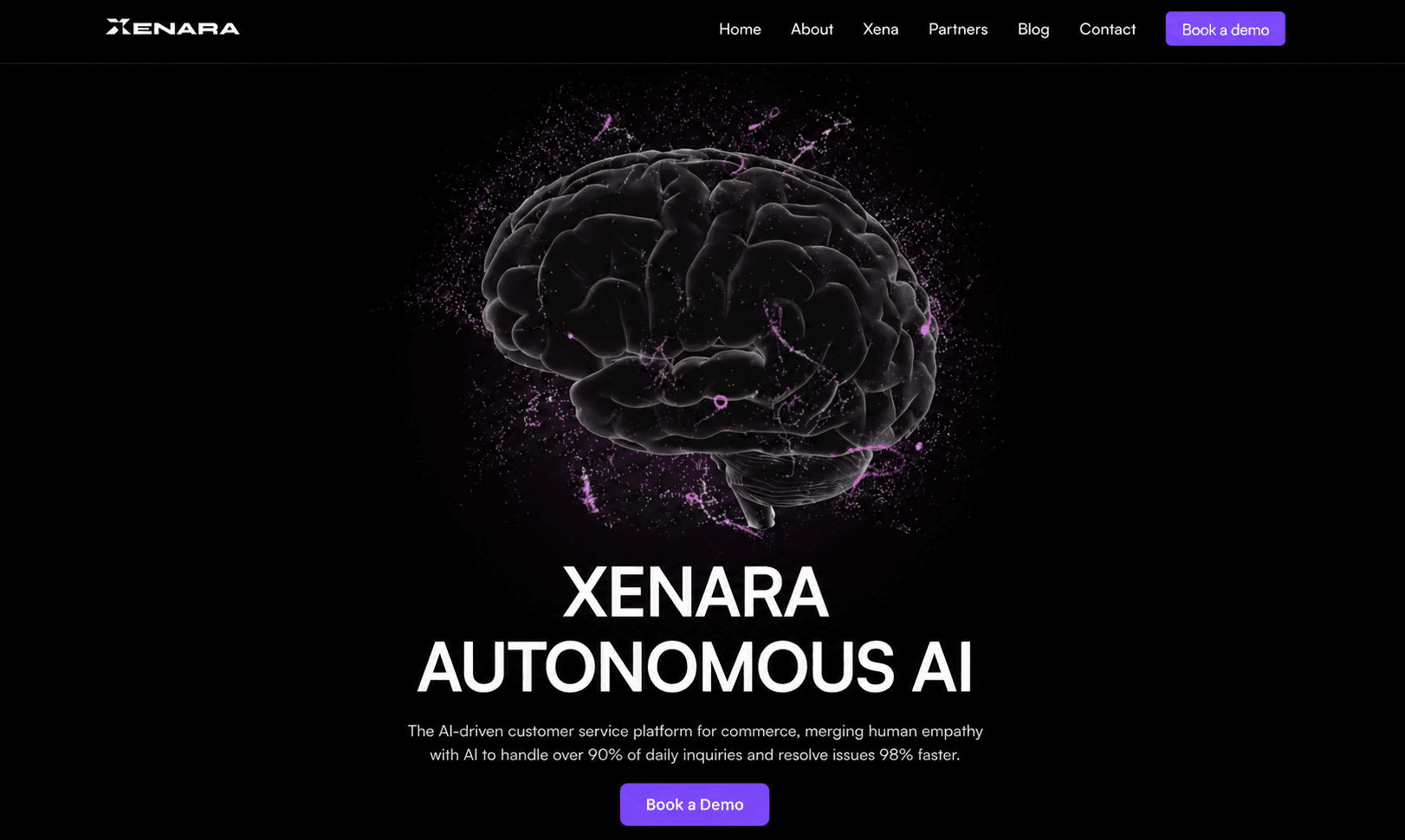
As part of future-facing design explorations, I experimented with Spline to create visual representations of Xenara's AI ecosystem. The objective was to make abstract systems feel more approachable by transforming technical concepts into interactive visual experiences. These explorations provided an additional layer of storytelling that complemented the broader product narrative.
Original Hero Section before redesign

Variations: Exploring Hero Concepts in Dark Mode

Final Version: Dark Mode
Design decision 01
Show the Product in Action Early
One of the most important decisions was reducing the distance between explanation and demonstration.
Instead of requiring users to read through multiple sections before seeing the platform, product experiences were introduced earlier in the journey.
This helped create stronger connections between messaging and functionality while making the platform feel more tangible.
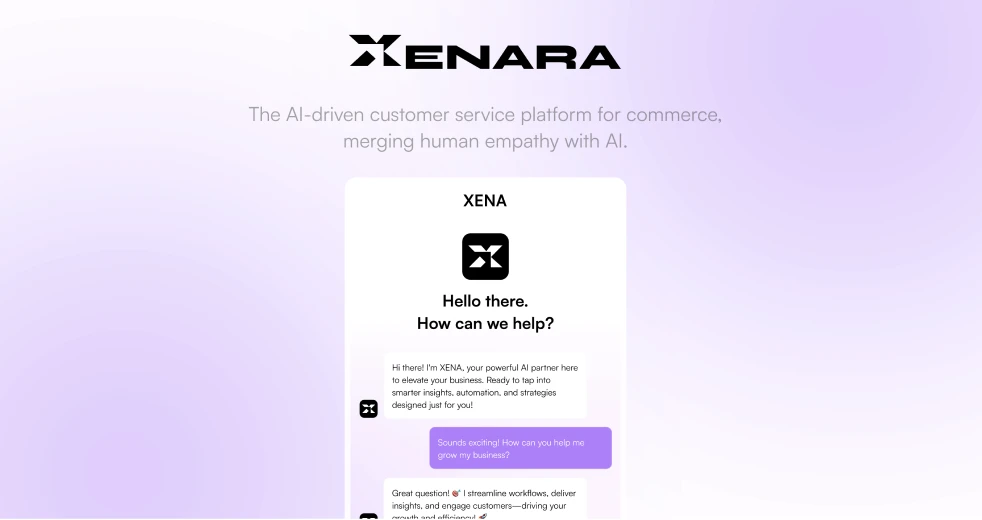
To communicate value instantly, I placed an animated chatbot experience directly after the hero section. The animation demonstrates Xenara’s core AI features in context, allowing users to understand the product’s capabilities without relying on heavy explanations.

Design decision 01
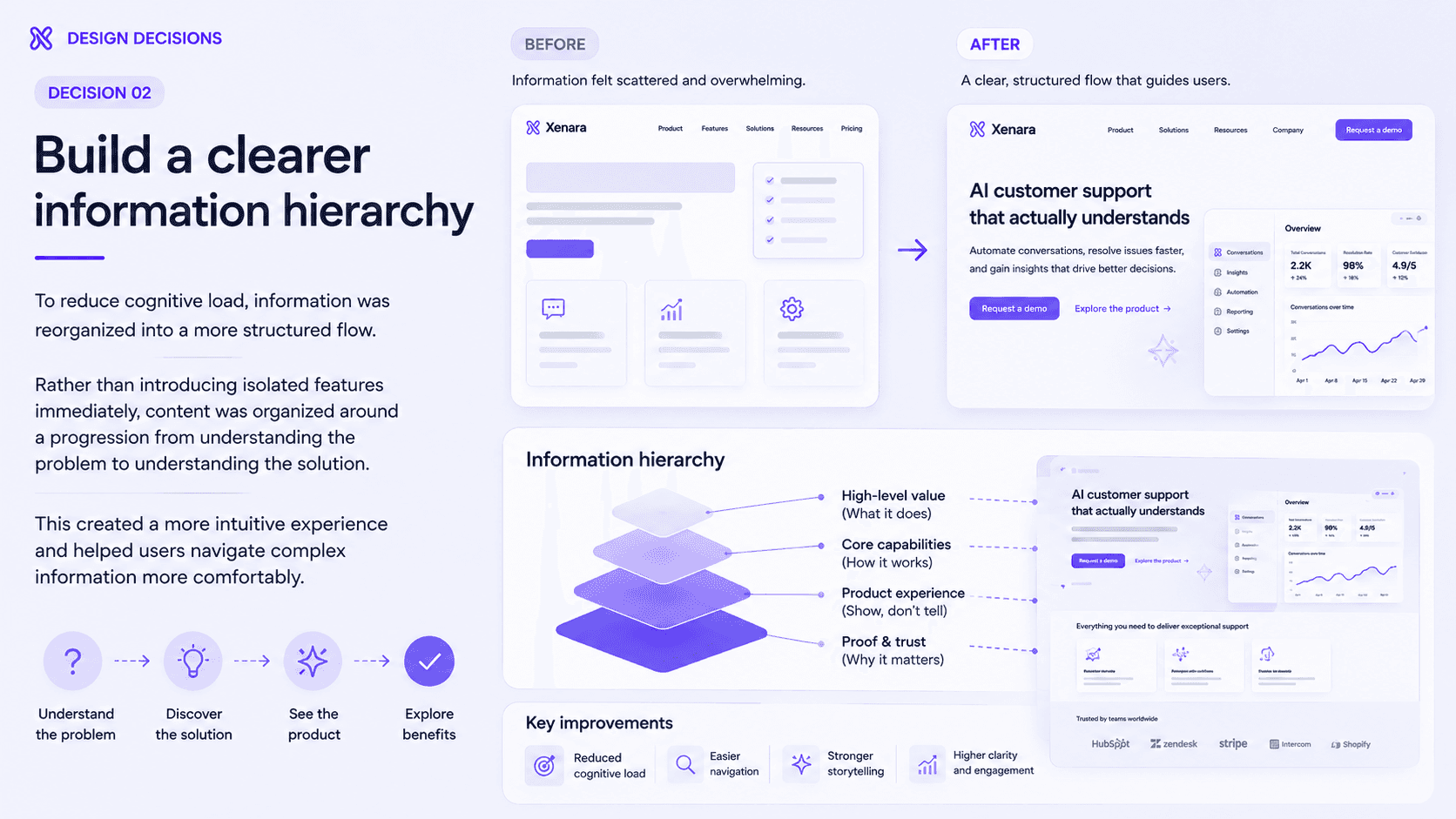
Build a clearer information hierarchy
To reduce cognitive load, information was reorganized into a more structured flow. Rather than introducing isolated features immediately, content was organized around a progression from understanding the problem to understanding the solution. This created a more intuitive experience and helped users navigate complex information more comfortably.

Design decision 02
Guide Users Through a Clear Product Story
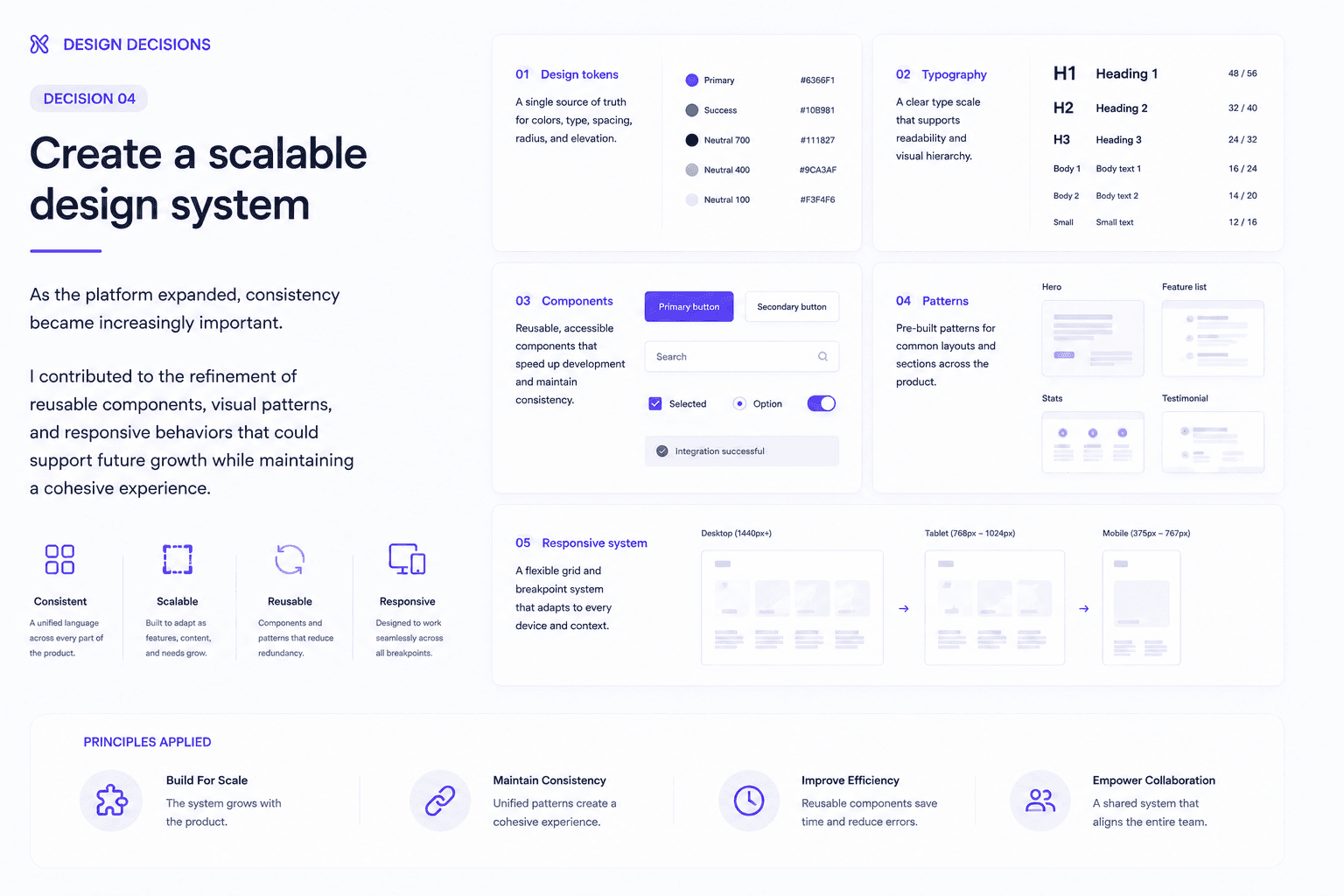
I structured the website around a clear narrative that moves users from understanding what Xenara is to how it works and why it matters. Content was organized into intentional sections with clear hierarchy, helping users progressively build understanding without feeling overwhelmed by technical detail.

Design decision 03
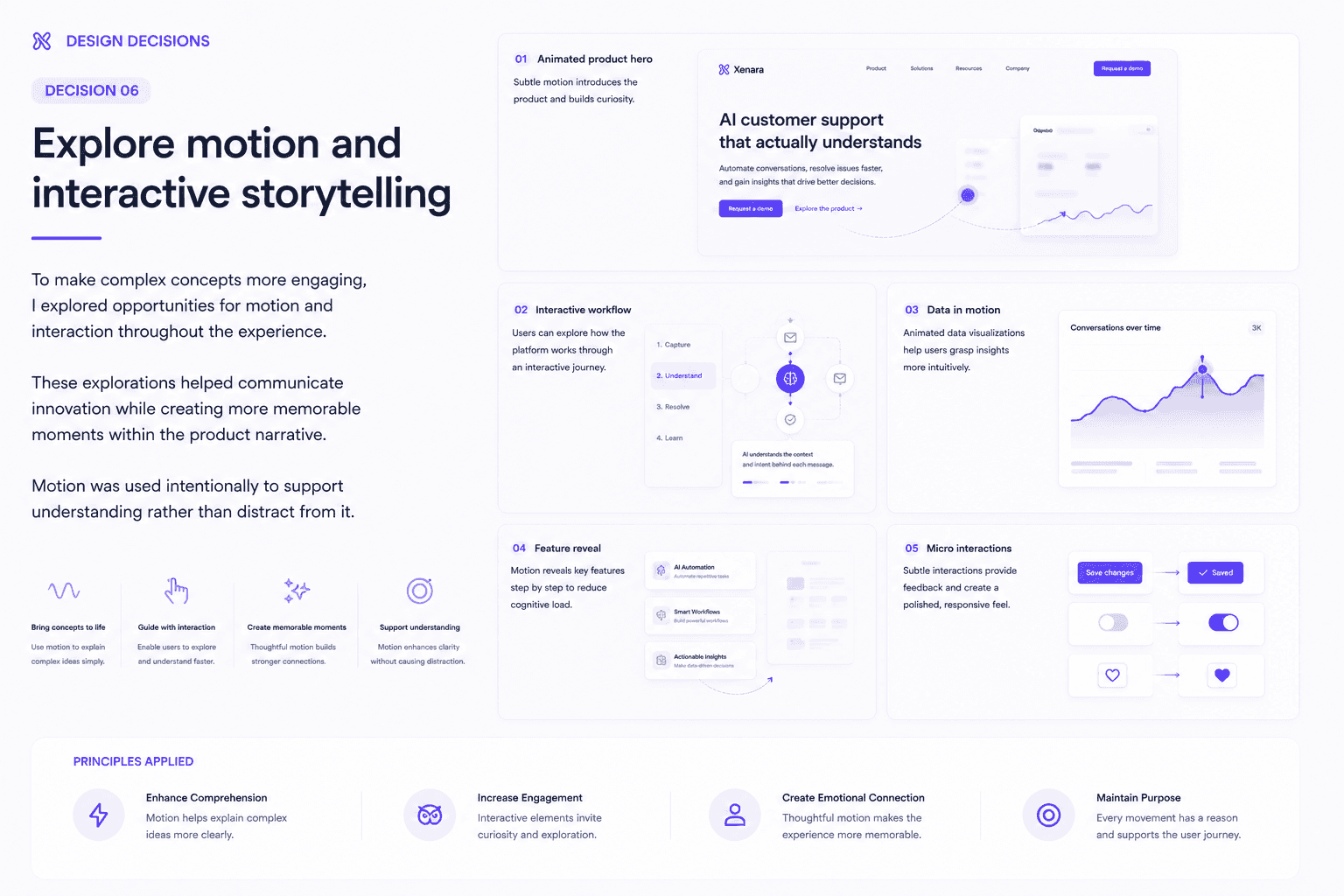
Explore motion and interactive storytelling
To make complex concepts more engaging, I explored opportunities for motion and interaction throughout the experience. These explorations helped communicate innovation while creating more memorable moments within the product narrative. Motion was used intentionally to support understanding rather than distract from it.
Version 01: Light Mode
Version 02: Dark Mode
Version 02: Dark Mode
Design decision 03
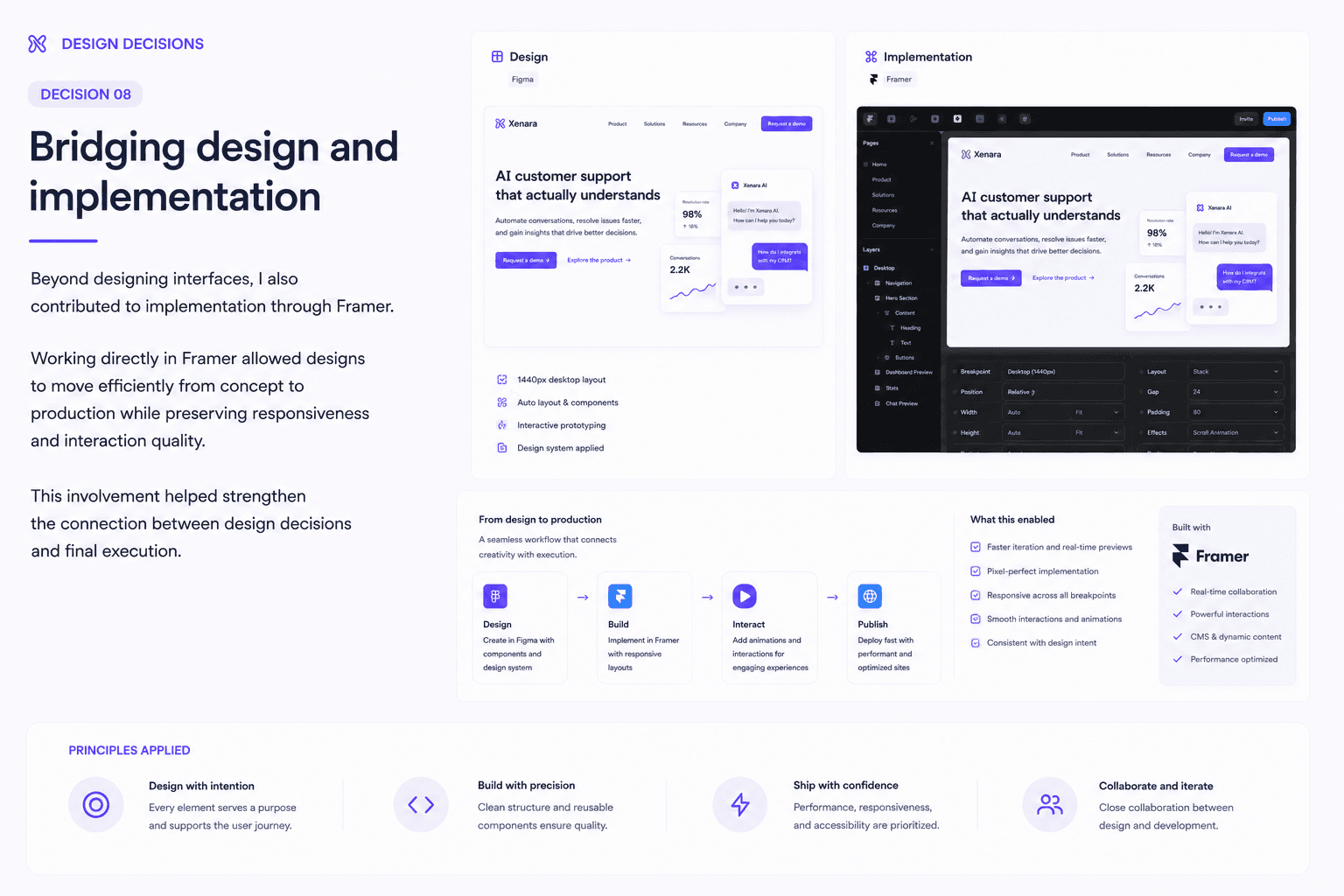
Bridging design and implementation
Beyond designing interfaces, I also contributed to implementation through Framer. Working directly in Framer allowed designs to move efficiently from concept to production while preserving responsiveness and interaction quality. This involvement helped strengthen the connection between design decisions and final execution.
Outcome
From Data to Dynamic Design
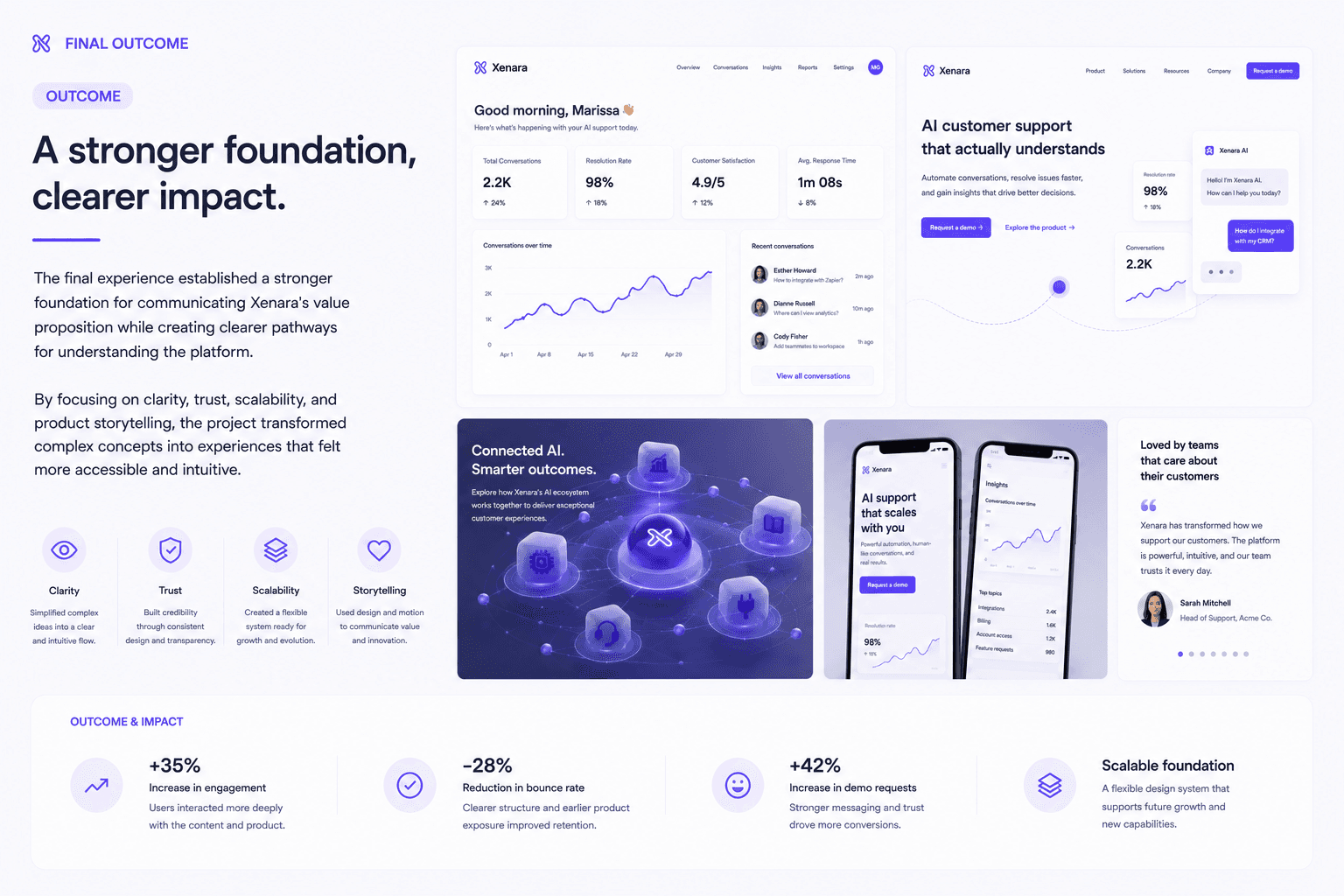
The final experience established a stronger foundation for communicating Xenara's value proposition while creating clearer pathways for understanding the platform. By focusing on clarity, trust, scalability, and product storytelling, the project transformed complex concepts into experiences that felt more accessible and intuitive.
Impact
Quantitative Results
1m 08s Average Session Duration
Users spent more time exploring the platform
60.5% Bounce Rate
Indicates strong engagement with the content.
Qualitative Results
Created a clearer framework for communicating Xenara's capabilities.
Improved visibility of product experiences.
Established reusable foundations for future growth.
Contributed to investor, customer, and partner-facing communications.
Retrospective
What Worked
One of the strongest outcomes of the project was shifting the experience from feature-focused communication to a more product-centered narrative. By introducing product experiences earlier and simplifying information hierarchy, the platform became easier to understand and more approachable for new users. The project also reinforced the value of combining visual storytelling with product design. Complex AI concepts became significantly easier to communicate when supported by strong visuals, motion, and product demonstrations.
What Was Challenging
Designing for AI products presented a unique challenge. Unlike traditional software, many AI capabilities are invisible to users. The difficulty was not designing interfaces, but designing understanding. It was important to balance innovation with clarity, ensuring that the experience felt sophisticated without becoming overwhelming. Another challenge was designing within a fast-moving startup environment where product direction continued to evolve throughout the project.
What I Would Improve
Given additional time, I would invest more heavily in user validation. Many design decisions were informed by stakeholder discussions, product goals, and internal feedback. Future iterations would benefit from usability testing with prospective customers to better understand how different audiences interpret the platform's value proposition. I would also explore more personalized experiences for different user groups, including customers, investors, and partners, each of whom approaches the platform with different goals and expectations.
Key Takeaways
This project changed the way I think about product design. I learned that users rarely struggle because information is missing. More often, they struggle because information is presented in the wrong order. The most impactful design decisions were not visual enhancements, but decisions that improved clarity, reduced cognitive load, and helped users understand value more quickly. Working on Xenara reinforced my belief that successful product design is not about making technology look impressive—it's about making complex systems feel understandable, trustworthy, and useful.
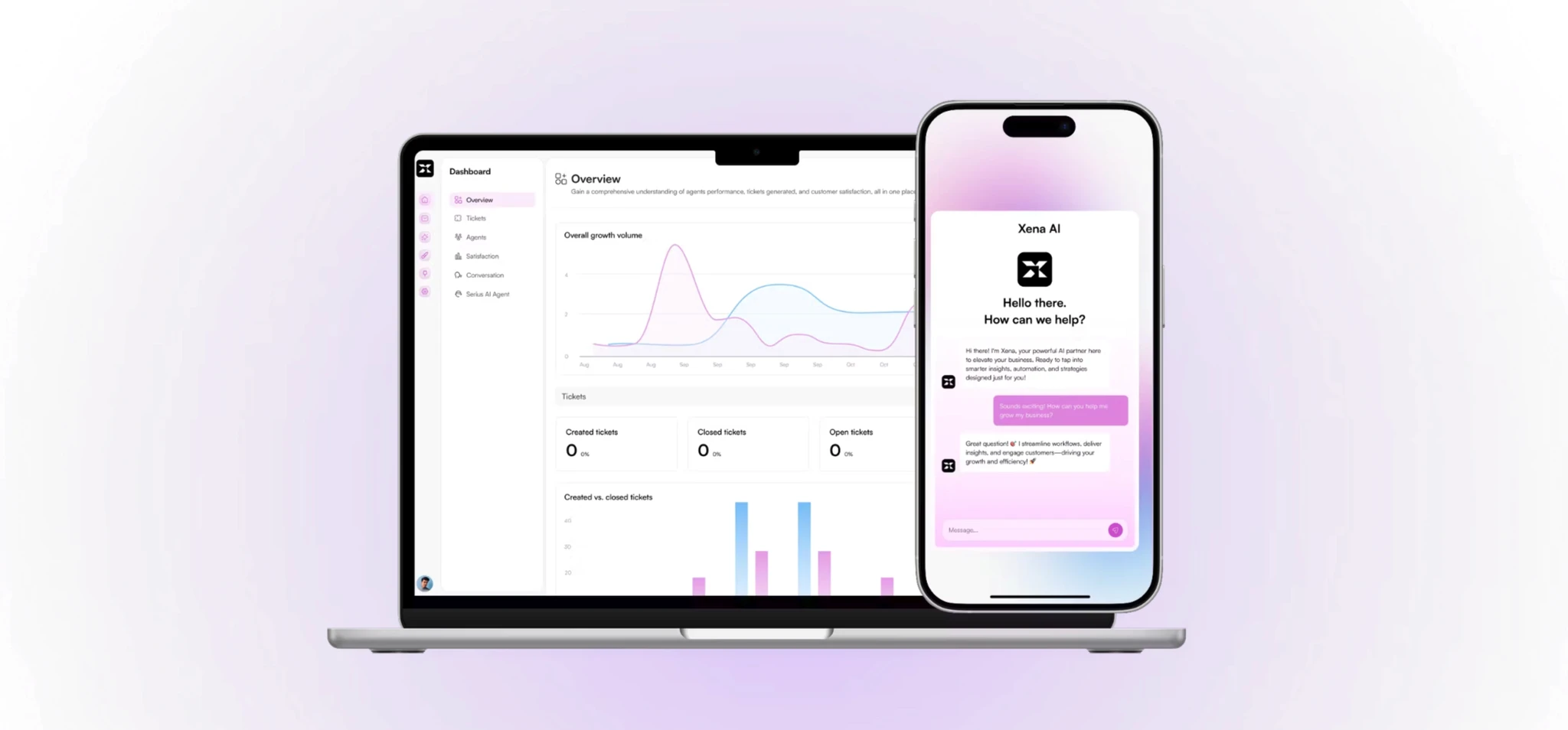
Note: The Framer website functioned as a high-fidelity product and storytelling prototype used for internal alignment, sales, and investor communication. Long-term platform decisions later evolved based on budget and maintenance considerations.