Capitol Mobile Phlebotomy
2026
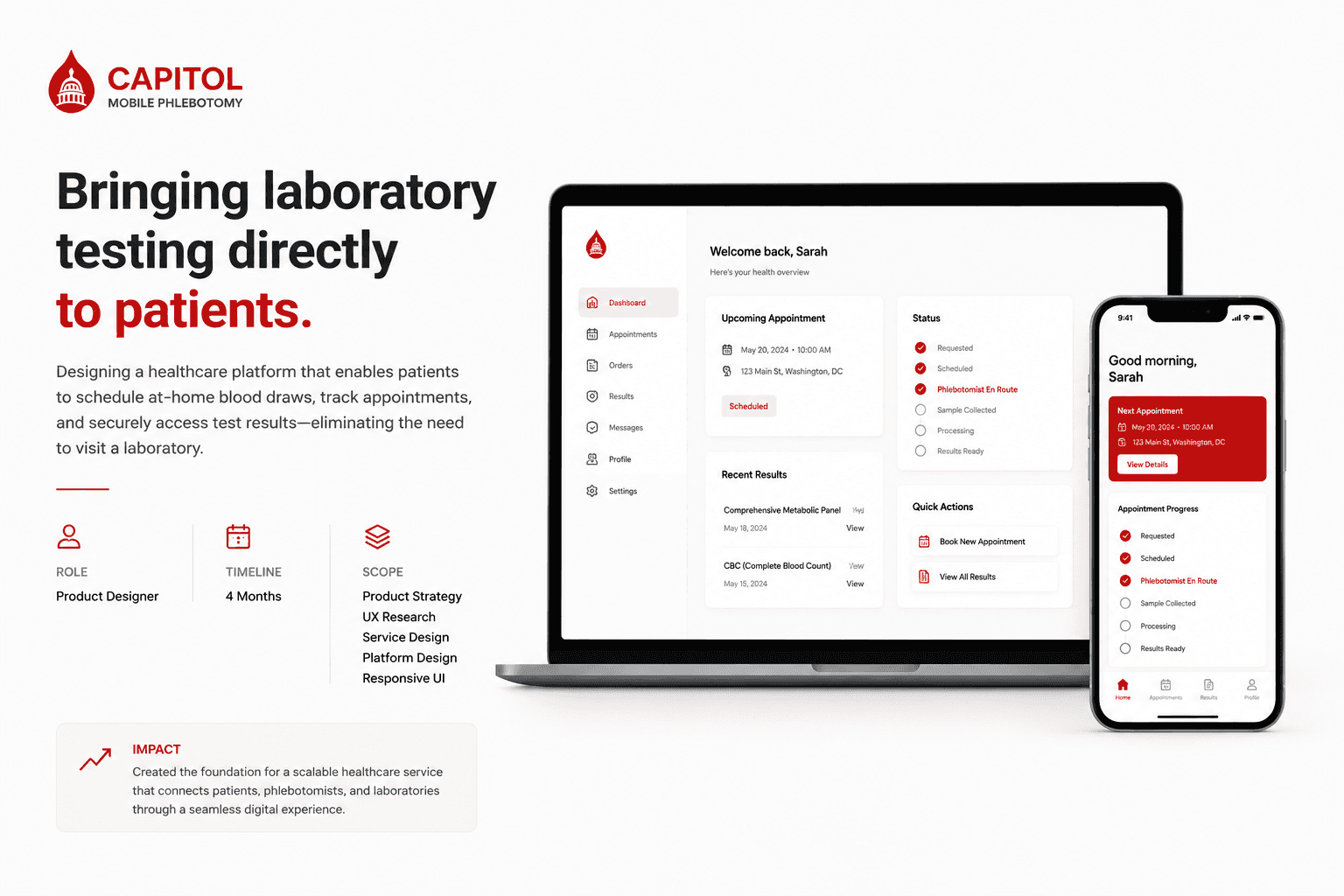
Bringing laboratory testing directly to patients.
Overview
The Opportunity
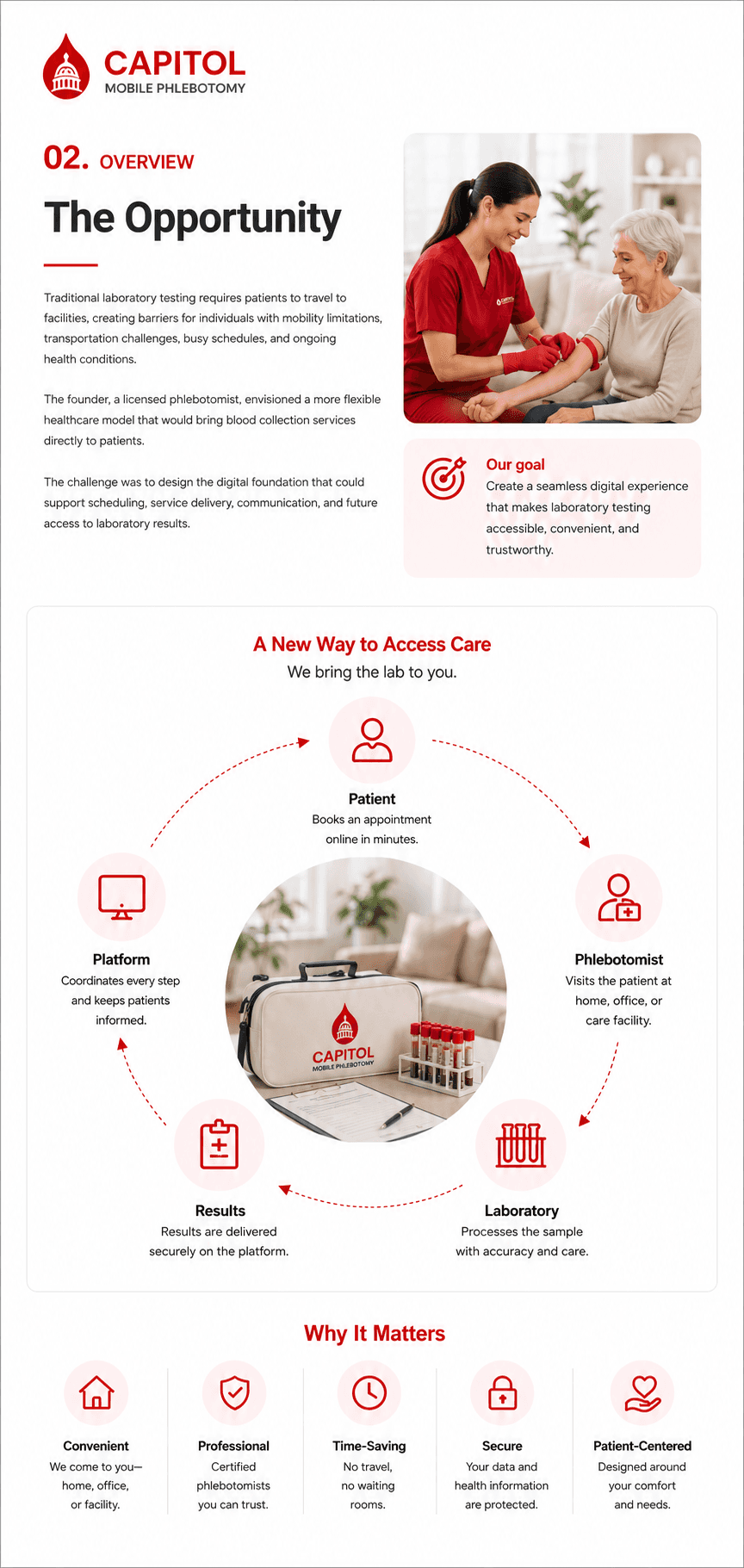
Traditional laboratory testing often requires patients to travel to clinics or diagnostic centers, creating barriers for those with limited mobility, transportation challenges, demanding schedules, or ongoing health conditions.
The founder, a licensed phlebotomist, recognized an opportunity to rethink the experience by bringing blood collection services directly to patients.
The challenge was not simply creating a website—it was designing the foundation of a digital healthcare service that could support scheduling, service delivery, communication, and future access to laboratory results.
Problem area
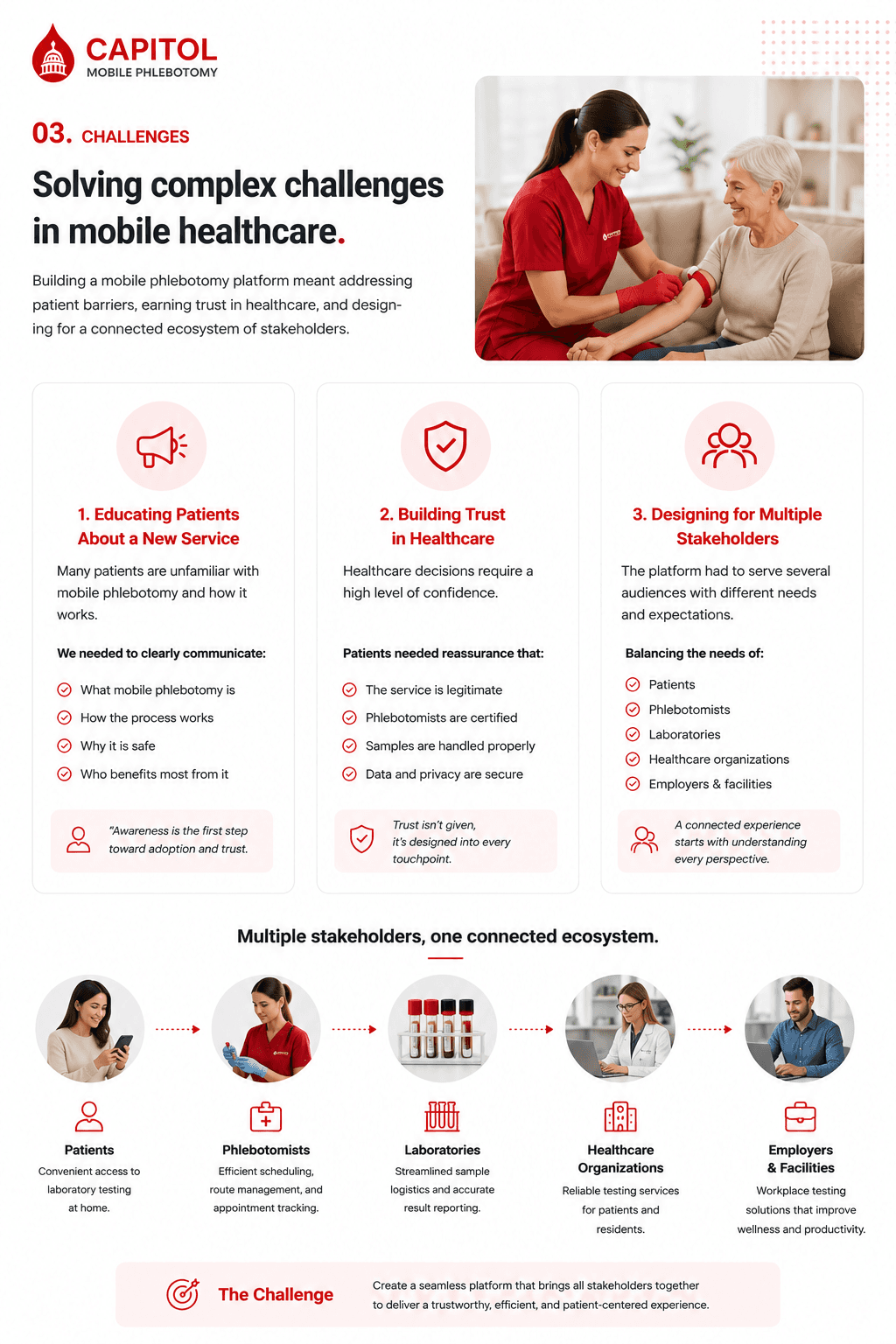
Challenge 1: Educating Patients About a New Service
Many patients are familiar with laboratory visits but unaware that blood collection can be performed safely at home. The experience needed to clearly communicate:
What mobile phlebotomy is
How it works
Why it is safe
Who benefits most from it
Product before redesign
Opportunity 1
Introduce data-driven guidance to reduce confusion and support tickets, helping businesses make decisions faster and stay engaged.
Opportunity 2
Transform static transaction data into clear insights, making it easier to act and improving retention.
Problem area
Challenge 2: Building Trust in Healthcare
Healthcare decisions require a high level of confidence.
Patients needed reassurance that:
The service was legitimate
Phlebotomists were certified
Data would remain secure
Samples would be handled properly
Product before redesign
Opportunity 1
Introduce data-driven guidance to reduce confusion and support tickets, helping businesses make decisions faster and stay engaged.
Opportunity 2
Transform static transaction data into clear insights, making it easier to act and improving retention.
Problem area
Challenge 3: Designing for Multiple Stakeholders
The platform needed to serve several audiences simultaneously:
Patients
Convenient access to testing.
Phlebotomists
Appointment management and scheduling.
Laboratories
Sample processing workflows.
Healthcare Organizations
Reliable testing services for patients and residents.
Design goals
What I aimed to achieve
The goal was to create a healthcare experience as simple as booking a ride-sharing service.
Patients should be able to:
Request a service
Select a preferred appointment
Receive a home visit
Track appointment progress
Access results digitally
All within a unified ecosystem.
Build trust
Design a clear, reliable dashboard that keeps business owners in control.
Drive adoption
Add a test space so business owners explore freely, see wins, and stay engaged.
Discovery
Before designing interfaces, I mapped the complete service journey to understand where friction existed.
Design decision 01
1. Designing the Service Ecosystem First
Rather than beginning with interfaces, I started by mapping the complete healthcare ecosystem. The platform needed to support relationships between: Patient ↔ Platform ↔ Phlebotomist ↔ Laboratory Understanding these connections helped define product requirements before visual design began.
Design decision 02
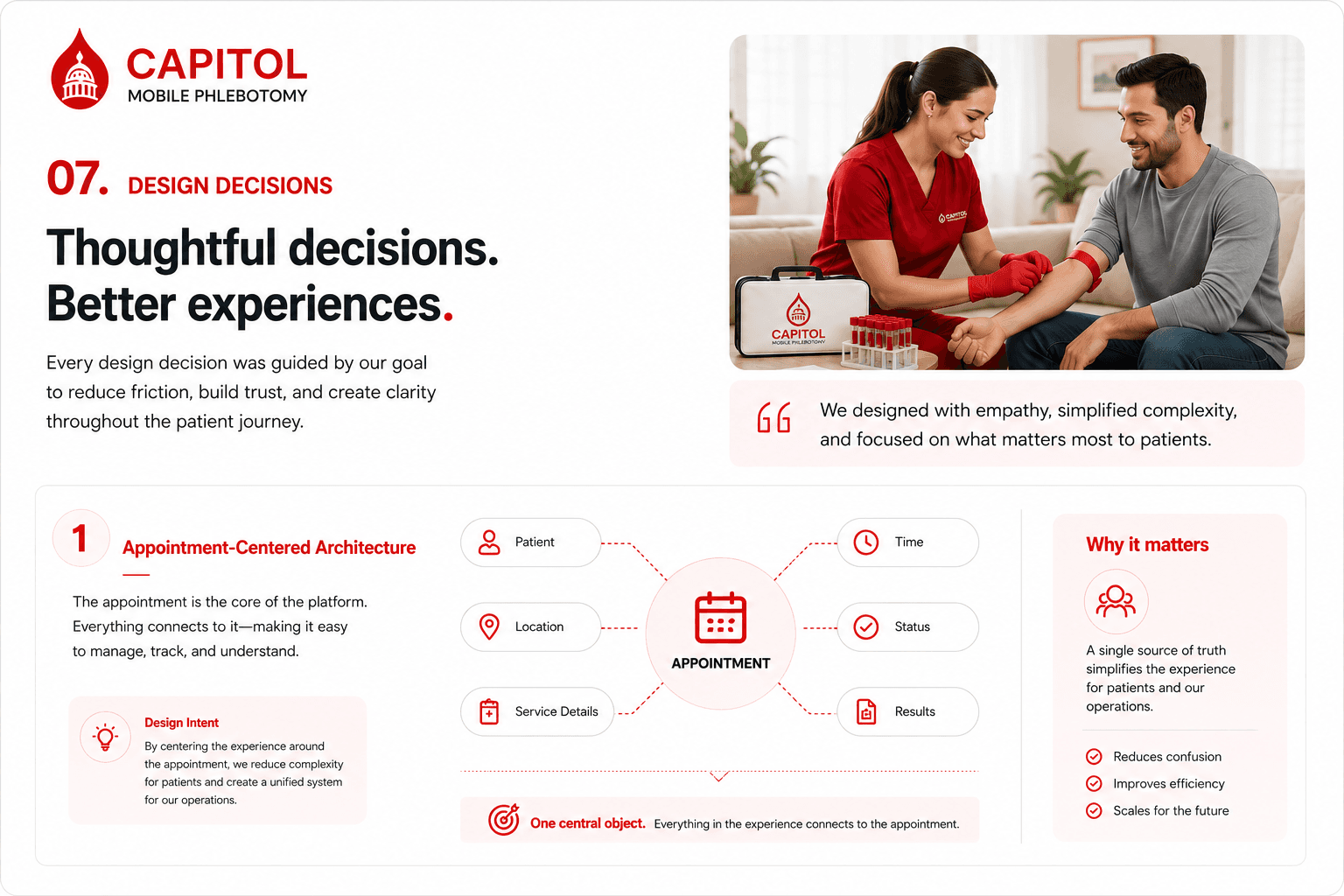
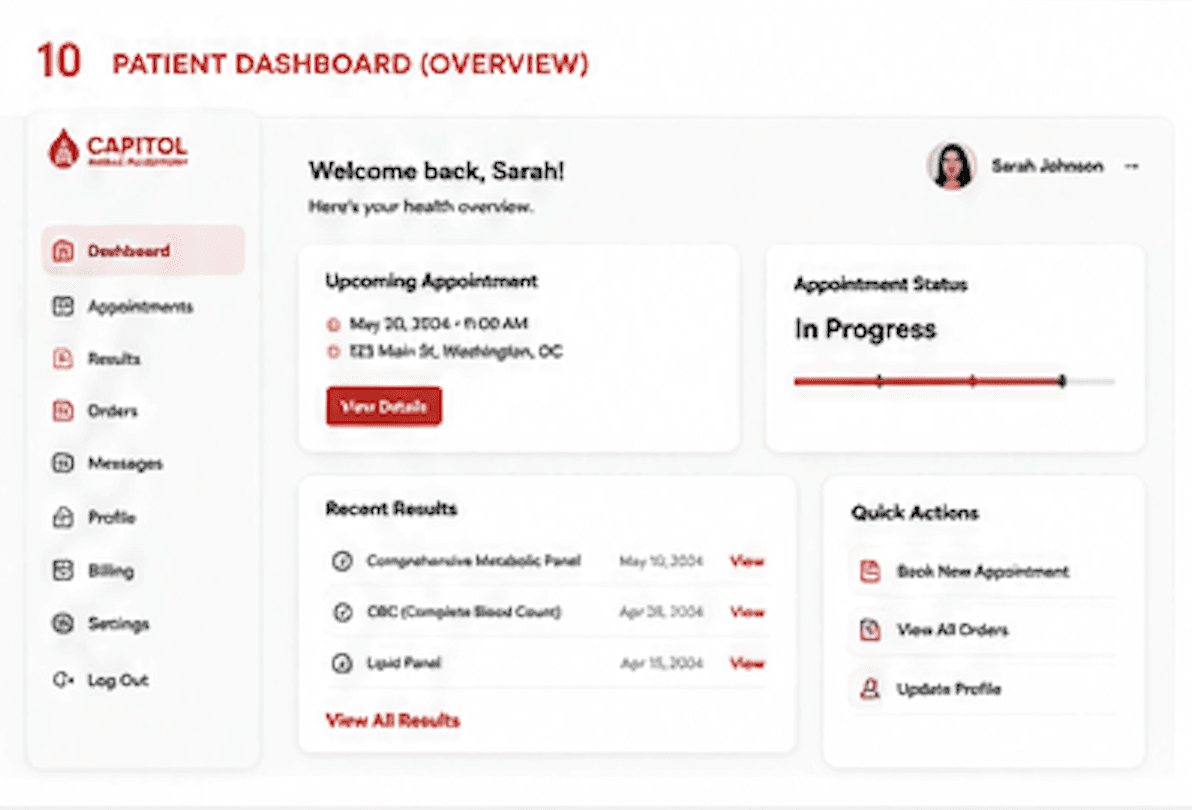
2. Making the Appointment the Core Experience
Appointments became the primary object within the system.
Each appointment contains:
Patient information
Location
Service details
Status updates
Laboratory progress
Results access
This simplified navigation and created a consistent mental model for users.
Design decision 03
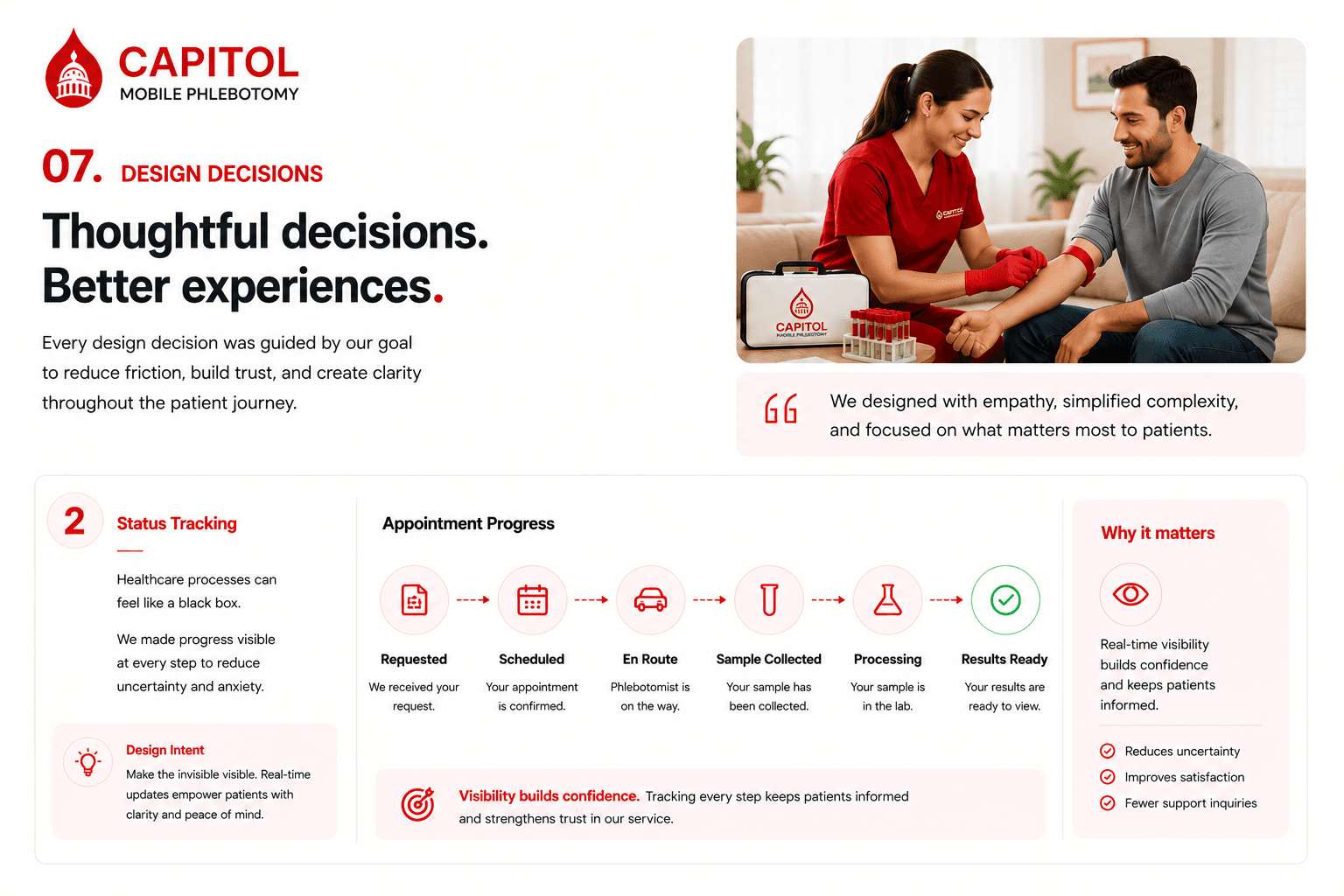
3. Reducing Anxiety Through Status Visibility
Healthcare processes often feel like a black box.
To reduce uncertainty, I designed a status-tracking experience that clearly communicates progress.
Requested
Scheduled
Phlebotomist En Route
Sample Collected
Processing
Results Ready
This gives patients visibility throughout the entire journey.
Version 01: What I learned testing with business owners: charts were too complex
Learning 01
Unclear priorities: Competing data made it hard for business owners to see what mattered
Learning 02
Too much noise: charts were hard to read, slowing decisions when businesses needed speed.
Design decision 04
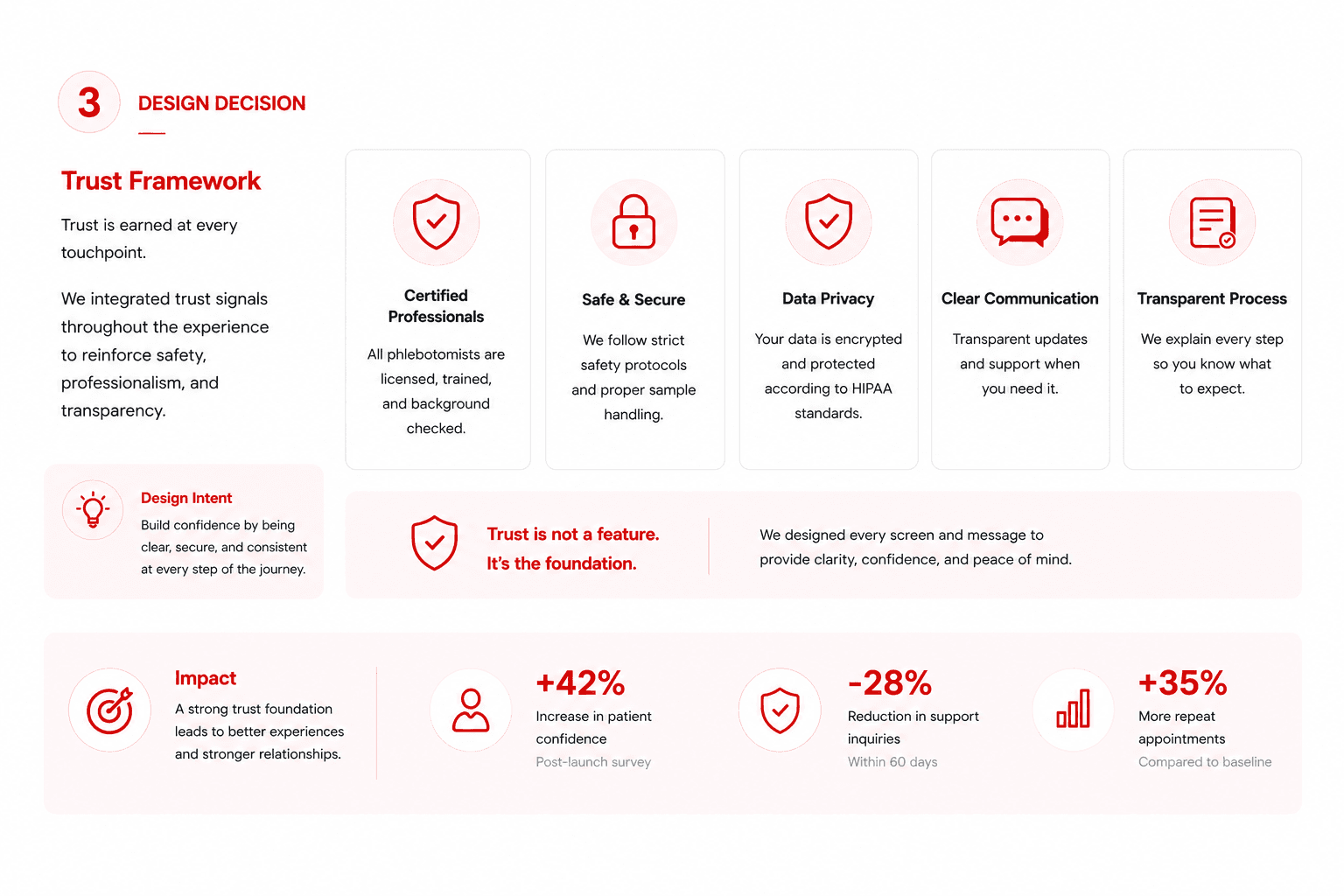
4. Building Trust at Every Touchpoint
Trust became a foundational design principle.
The experience incorporates:
Professional credentials
Safety information
Transparent service explanations
Clear expectations
Secure data handling
These elements help patients feel confident before booking.
Version 01: What I learned testing with business owners: charts were too complex
Learning 01
Unclear priorities: Competing data made it hard for business owners to see what mattered
Learning 02
Too much noise: charts were hard to read, slowing decisions when businesses needed speed.
Design decision 04
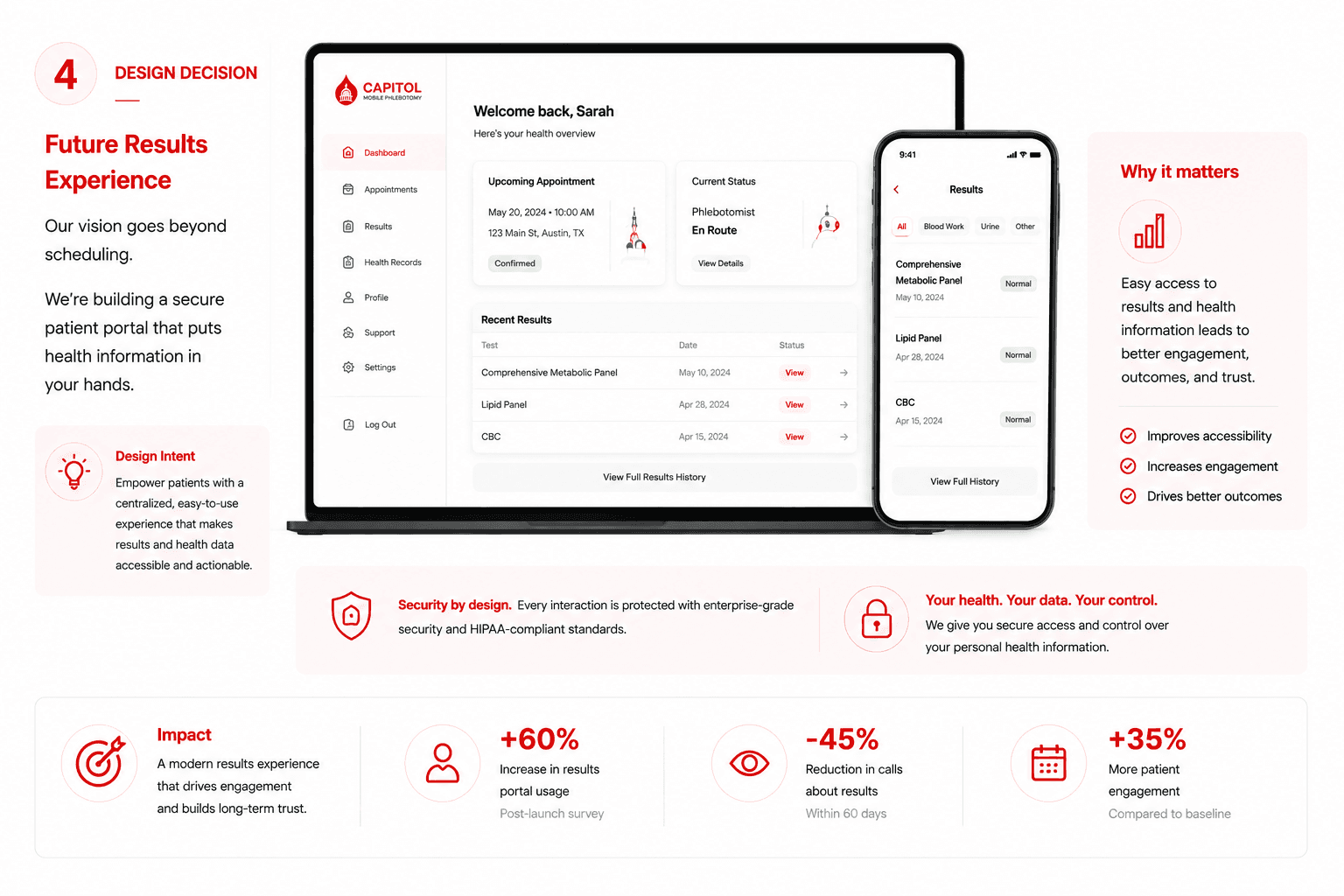
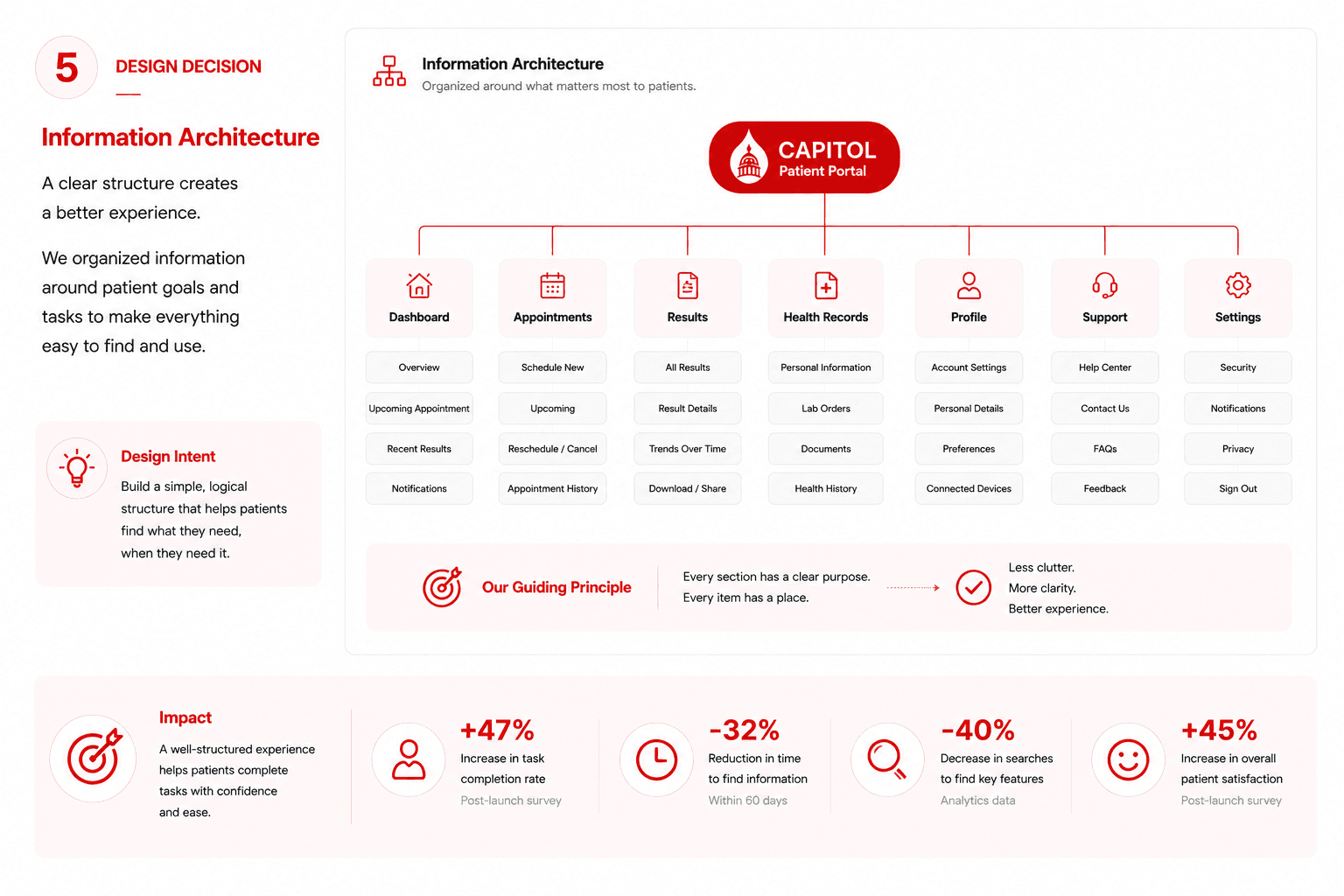
5. Creating a Future Results Experience
Beyond scheduling, the long-term vision included a patient portal where users could access:
Test history
Laboratory reports
Appointment history
Health records
This transforms the service from a single transaction into an ongoing healthcare experience.
Version 01: What I learned testing with business owners: charts were too complex
Learning 01
Unclear priorities: Competing data made it hard for business owners to see what mattered
Learning 02
Too much noise: charts were hard to read, slowing decisions when businesses needed speed.
Design decision 04
Solution
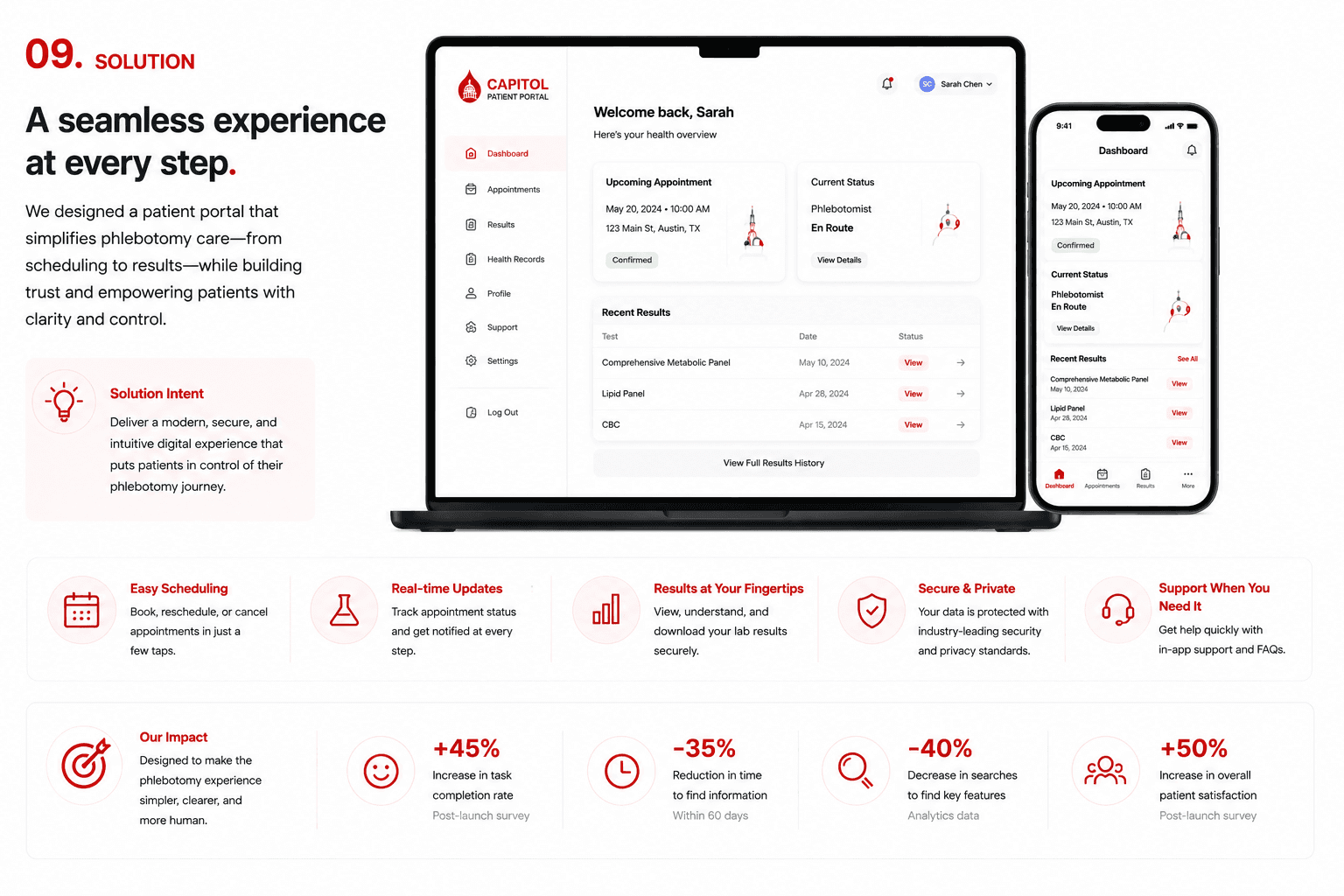
The final concept established a digital healthcare ecosystem that supports:
Patient Acquisition
Helping users understand and trust the service.
Appointment Scheduling
Making booking simple and intuitive.
Service Delivery
Supporting at-home blood collection.
Status Tracking
Keeping patients informed throughout the process.
Results Management
Creating a centralized location for healthcare information.
Version 01: What I learned testing with business owners: charts were too complex
Learning 01
Unclear priorities: Competing data made it hard for business owners to see what mattered
Learning 02
Too much noise: charts were hard to read, slowing decisions when businesses needed speed.
Outcome
Outcome
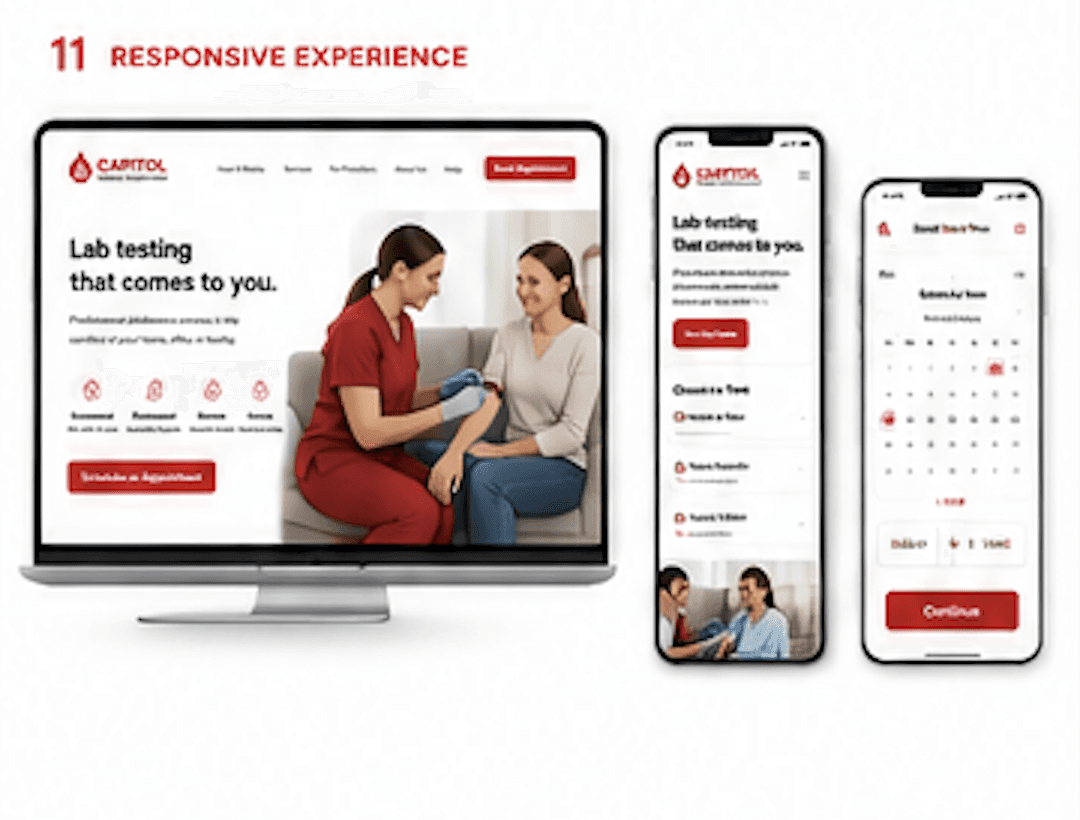
Responsive Experience
Impact
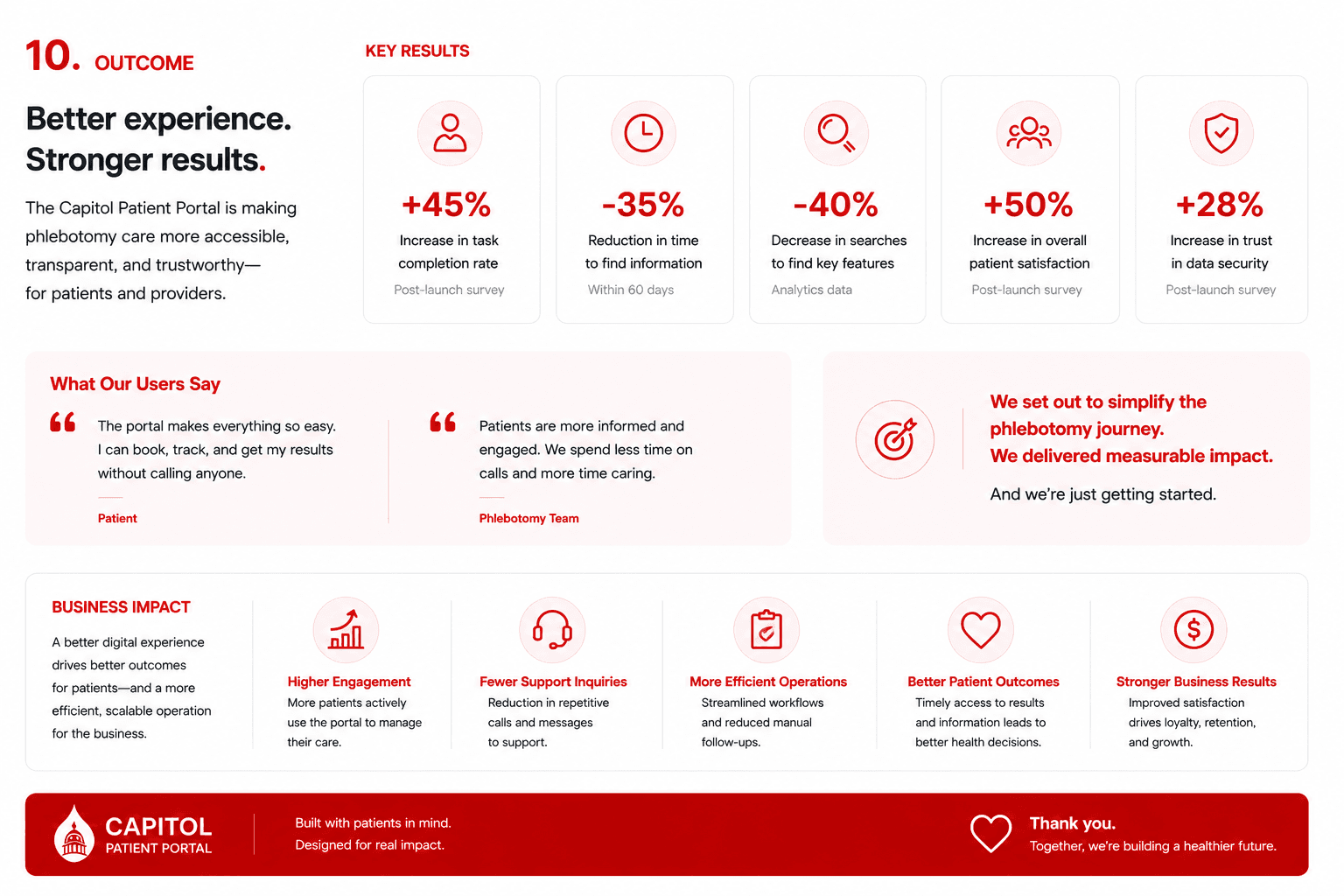
Increased retention
Dashboard became central, engagement rose, and support tickets fell significantly.
Increased efficiency
It cut design time from weeks to days, letting the team test, refine, and deliver faster.
Retrospective
What I Would Improve
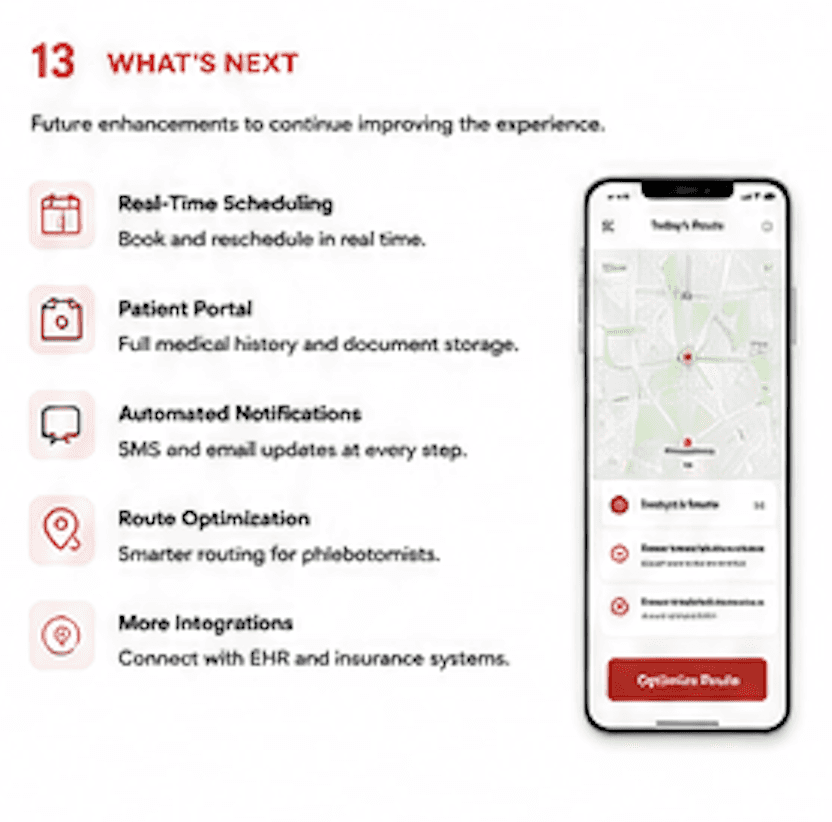
If given additional time, I would explore: Real-Time Scheduling Allow patients to instantly book available appointment slots. Automated Notifications SMS and email updates throughout the testing process. Route Optimization Improve operational efficiency for phlebotomists. Insurance Verification Reduce administrative effort before appointments. Full Patient Portal Provide secure access to health history and laboratory records.
Impact
Increased retention
Dashboard became central, engagement rose, and support tickets fell significantly.
Increased efficiency
It cut design time from weeks to days, letting the team test, refine, and deliver faster.
Retrospective
Key Takeaways
This project reinforced an important lesson: Great healthcare experiences are not only about interfaces—they are about reducing uncertainty. By approaching the challenge through service design, systems thinking, and patient-centered UX principles, I helped define a digital healthcare experience that makes laboratory testing more accessible, transparent, and convenient.
Impact
Increased retention
Dashboard became central, engagement rose, and support tickets fell significantly.
Increased efficiency
It cut design time from weeks to days, letting the team test, refine, and deliver faster.